Raising kids is one of life’s great adventures — and getting them safely from A to B is one of its quietest challenges. Anyone who has heard a chorus of “shotgun!” from the back seat knows the front seat is prime real estate. But when children are small, where they sit, and how they’re buckled in, is one of the most important safety decisions a parent or grandparent makes.
The rules and the research have moved on since this article was first written, so we’ve refreshed it for 2026 with the current Ontario requirements and best practices. The short version: keep your child in the back seat, in the right stage of seat, for as long as they fit it — and treat the law as the minimum, not the goal.
Quick answer: the four car seat stages in Ontario
If you only read one section, read this. Ontario follows four stages of child restraint, and the golden rule is to keep your child in each stage as long as they meet the seat’s height and weight limits before moving to the next:
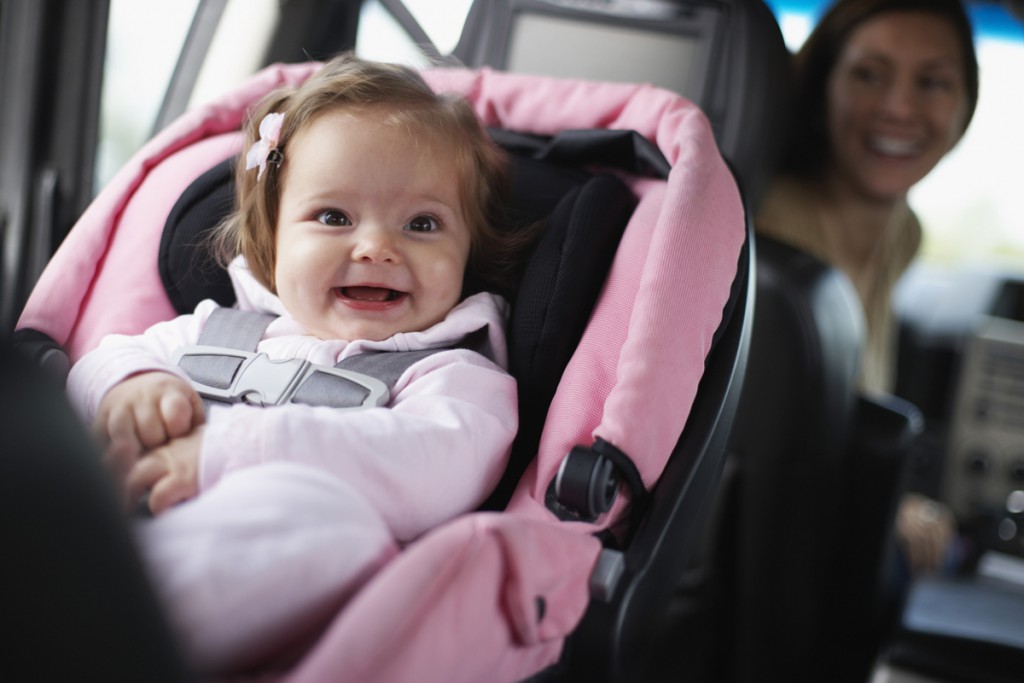
- Stage 1 — Rear-facing seat: from birth, legally required until at least 9 kg (20 lb). Best practice is to stay rear-facing far longer (to age 2–3+), as long as the seat allows.
- Stage 2 — Forward-facing seat with a harness: for children roughly 9–18 kg (20–40 lb), once they’ve outgrown rear-facing. Many seats now harness well beyond this.
- Stage 3 — Booster seat: required for children under 8 who weigh 18–36 kg (40–80 lb) and are under 145 cm (4 ft 9 in) tall.
- Stage 4 — Seatbelt alone: your child can use the seatbelt by itself once they reach any one of these — turn 8 years old, weigh 36 kg (80 lb), or stand 145 cm (4 ft 9 in) tall — and the belt fits properly.
One rule sits above all of them: children under 13 are safest in the back seat, and the middle of the rear seat is the safest spot in the vehicle because it’s farthest from every point of impact in a collision.
Stage 1: Rear-facing seats — longer is better
A rear-facing seat cradles a baby’s head, neck and spine, spreading the force of a crash across the whole back rather than yanking on a tiny neck. Because an infant’s neck muscles are still developing, this is by far the safest position — which is why Ontario requires rear-facing until at least 9 kg (20 lb), and why public health experts urge parents to go well beyond that.
Modern convertible seats let many children ride rear-facing to 18 kg (40 lb) or more, often to age two, three, or beyond. There is no such thing as “too long” rear-facing as long as your child still fits within the seat’s limits. Resist the urge to turn the seat around on a birthday — let your child’s size, not the calendar, make the call.
Stage 2: Forward-facing seats with a harness
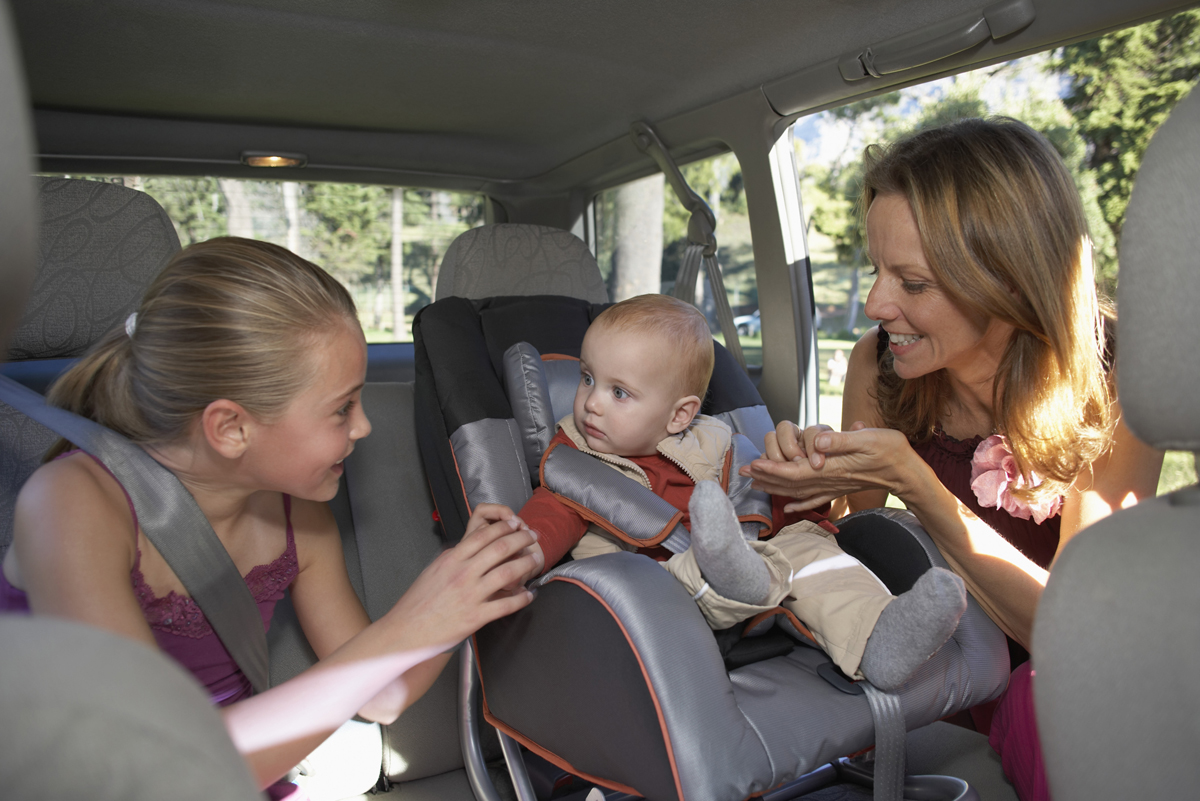 Once your child has genuinely outgrown the rear-facing limits, they can move to a forward-facing seat with a five-point harness. By now they have stronger neck and back muscles to handle a sudden stop. Many forward-facing harnessed seats support children up to 65 lb (around 30 kg) or more — so again, keep them harnessed until they top out the seat before thinking about a booster.
Two things parents often miss at this stage: the top tether strap on the back of the seat must be anchored to the vehicle’s tether point (it dramatically reduces head movement in a crash), and the harness should be snug enough that you can’t pinch any slack at the shoulder, with the chest clip level with the armpits.
Stage 3: Booster seats — getting the belt to fit
A booster doesn’t restrain your child the way a harness does. Its job is to lift and position your child so the vehicle’s adult seatbelt sits correctly on their body. That’s why a booster only works in a seating position with both a lap and shoulder belt — never a lap belt alone.
When your child rides in a booster, teach them how the belt should sit, but check it yourself before every trip:
- The shoulder strap lies centred across the shoulder and the middle of the chest — never under the arm, behind the back, or across the neck or face.
- The lap belt sits low and snug across the hips — never up over the soft part of the stomach.
- Skip puffy winter coats under the belt; bulky layers push the belt away from the body and ruin the fit. Buckle first, then add a blanket over top.
Stage 4: Is your child ready for the seatbelt alone?
Meeting the legal minimum (age 8, 36 kg/80 lb, or 145 cm/4 ft 9 in) doesn’t automatically mean a child is ready for the belt by itself. Before you retire the booster, run this five-point fit test on every trip:
- The child sits all the way back against the vehicle seat.
- Their knees bend naturally at the edge of the seat.
- The lap belt sits low across the hips, touching the thighs.
- The shoulder belt crosses the centre of the shoulder and chest.
- They can stay seated like this, comfortably, for the whole trip.
If they can’t pass all five, keep them in the booster a little longer — even if their friends have already graduated.
When can my child ride in the front seat?
This is the question every kid wants answered. In Ontario, children under 13 are safest in the back seat — and the reason is the front airbag. An airbag deploys in a fraction of a second with tremendous force, designed to protect a fully grown adult. That same force striking the head or chest of a smaller child can cause serious injury.
If an older child does eventually ride up front, push the seat as far back as it will go, make sure they sit fully back against the seat, and keep feet off the dash. Our honest advice: don’t talk up how great the front seat is. They’ll have plenty of years to call “shotgun” later.
Before you buy or borrow: 4 things to check
A great seat used incorrectly — or an expired one — can’t do its job. Whether you’re a parent shopping new or a grandparent setting up a seat for visits, check for these:
- The National Safety Mark label. This shows the seat meets Canadian Motor Vehicle Safety Standards and is legal to use in Canada. Seats bought abroad often don’t qualify.
- The expiry / useful-life date. Every Canadian car seat has one, usually printed on a sticker on the base. Plastics and foam degrade over time — an expired seat should be retired, even if it looks fine.
- No crash history. A seat that has been in a collision should be replaced, even with no visible damage. Be cautious with second-hand seats where you can’t verify the history.
- A tight install. Once installed with the seatbelt or the Universal Anchorage System (UAS/LATCH), the seat should move no more than 2.5 cm (1 in) side to side or front to back at the belt path.
It’s also worth registering your seat with the manufacturer so you’re notified of recalls, and checking current recalls anytime through Transport Canada’s child car seat safety page.
Ontario car seat law and fines at a glance
In Ontario, all drivers — including visitors from out of province — must make sure children under 16 wear a seatbelt and children under 8 are secured in the correct car seat or booster. The driver is legally responsible. Failing to properly secure a child can result in a $240 fine and two demerit points under the Highway Traffic Act. Ride-share trips (Uber, Lyft) and most taxis-for-personal-use are not exempt, so plan to bring the right seat.
| Stage | Seat type | Ontario requirement | Move on when… |
|---|---|---|---|
| 1 | Rear-facing | Birth to at least 9 kg (20 lb) | Child outgrows the seat’s rear-facing limits (go as long as possible) |
| 2 | Forward-facing + harness | Roughly 9–18 kg (20–40 lb) | Child outgrows the harness height/weight limit |
| 3 | Booster seat | Under age 8, 18–36 kg (40–80 lb), under 145 cm | Child reaches 8 yrs OR 36 kg OR 145 cm and passes the belt-fit test |
| 4 | Seatbelt alone | Meets any one Stage 3 exit milestone | Stays in the back seat until at least age 13 |
Frequently asked questions
How long should my child stay rear-facing in Ontario?
The legal minimum is 9 kg (20 lb), but the safest practice is to keep your child rear-facing until they reach the maximum height or weight of their seat — often to age two, three, or beyond. Rear-facing best protects a young child’s head, neck and spine.
When can a child stop using a booster seat in Ontario?
A child can use the seatbelt alone once they reach any one of these milestones: they turn 8 years old, weigh 36 kg (80 lb), or stand 145 cm (4 ft 9 in) tall — and the belt fits them properly. If the belt doesn’t fit correctly yet, keep them boostered.
At what age can a child sit in the front seat in Ontario?
There’s no single front-seat age in the law, but children under 13 are safest in the back seat because of the force of front airbags. Keep kids in the rear as long as you reasonably can.
What is the fine for not using a car seat in Ontario?
Failing to properly secure a child can mean a $240 fine plus two demerit points under the Highway Traffic Act. The driver is responsible for every passenger under 16.
Can I use a second-hand or expired car seat?
Avoid any seat that’s past its expiry date, has been in a collision, or whose history you can’t confirm. Make sure any seat carries the National Safety Mark, which means it’s legal for use in Canada.
Your family’s safety starts with a safe vehicle
The right car seat protects your most precious cargo — and so does a vehicle you can trust. Tires that grip, brakes that respond, and lights that work are the foundation that keeps everyone in the back seat safe. If it’s been a while since your last check-up, book an appointment for a safety inspection at your local Active Green + Ross. With over 65 Canadian-owned and operated locations across Ontario, expert help is always close to home.
Book your vehicle safety inspection today »
 Article originally written by Scott Marshall and updated for 2026 by Active Green + Ross. We are proudly Canadian owned and operated and based in Ontario.
Scott Marshall is Director of Training for Young Drivers of Canada and has worked in road safety since 1988. He was a judge during the first three seasons of Canada’s Worst Driver on Discovery Network. Scott has been writing columns on driving since 2005, and his work has appeared in newspapers, magazines, and websites across Canada.