Summer is prime road trip season in Canada — and if you’re driving out from Ontario in 2026, the country is yours to explore. Whether you’re heading east to the Maritimes for lobster suppers, northeast to Quebec City, or all the way west to the Rocky Mountains, a great trip starts long before you turn the key. With four kids of my own, I’ve learned that the difference between a memorable family adventure and a stressful ordeal almost always comes down to preparation.
This 2026 guide is built specifically for Ontario drivers travelling across Canada. Below you’ll find our updated top tips, plus a quick-reference checklist and an FAQ at the bottom answering the questions we get asked most often.
Quick Summary: 2026 Summer Road Trip Checklist for Ontario Drivers
- Service your vehicle 2–3 weeks before departure (oil, brakes, fluids, AC, battery).
- Check tire pressure cold — summer heat raises pressure, and underinflated tires fail more often in hot weather.
- Plan stops every 2 hours using ONroute centres on Highways 401 and 400, or Trans-Canada Highway rest areas further out.
- Pack below the seat backs and secure all loose items, including roof racks.
- Pre-program your GPS and download offline maps for Northern Ontario and the Prairies, where cell coverage drops.
- Pack an emergency kit: water, snacks, first aid, jumper cables, flashlight, blanket, basic tools.
- Check road and wildfire conditions daily at 511on.ca and the equivalent provincial 511 service.
Tip #1 – Have your vehicle properly serviced before you leave
 Long-distance summer driving is hard on a vehicle. Heat, highway speeds, and heavy loads expose any weakness in your car, so it’s worth catching problems in your driveway rather than on the shoulder of Highway 17.
Two to three weeks before you leave, book a tune-up and ask your technician to confirm the following:
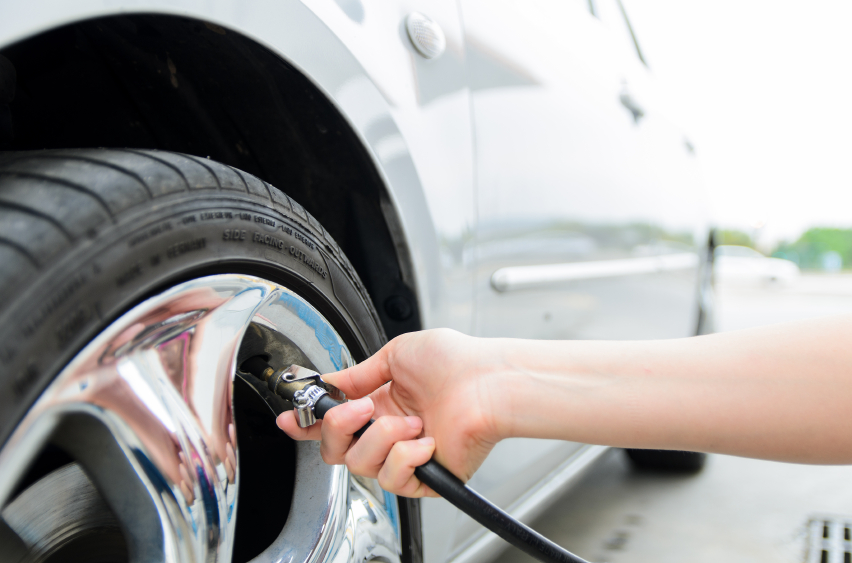
- Tire condition and pressure — check tread depth and look for uneven wear. Inflate to the pressure listed on your driver-side door jamb, not the number on the tire sidewall.
- Brakes — pads, rotors, and brake fluid level.
- Fluids — engine oil, coolant, transmission, power steering, and washer fluid (you’ll go through more than you expect on bug-heavy prairie highways).
- Battery — summer heat is harder on batteries than winter cold. Have it load-tested if it’s more than three years old.
- Air conditioning — get this checked before, not after, you cross into 30°C heat in southern Saskatchewan.
- Belts, hoses, and wipers — cracks and brittleness are easy to spot and cheap to fix.
A roadside assistance membership (CAA or your insurer’s equivalent) is worth every cent on a cross-country trip. If something does go wrong, help is one phone call away — and most plans cover towing across provincial lines.
Tip #2 – Plan your route, including where you’ll stop
 A good route plan does two things: it tells you how far you’re driving each day, and where you’ll stop along the way. For trips out of Ontario, that matters more than people expect.
Heading east? Highway 401 connects Toronto to the Quebec border, then Autoroute 20 takes you through Montreal toward the Maritimes. Toronto to Halifax is roughly 1,800 km — most families split it over 2–3 days.
Heading west? You’ll likely take Highway 400 north to Highway 69/400 to Sudbury, then Highway 17 (the Trans-Canada) west. Toronto to Winnipeg is about 2,200 km, and Toronto to Vancouver is around 4,400 km. Don’t try to compress these — Northern Ontario alone is a two-day drive, and stretches between Wawa and Thunder Bay have very limited services.
Heading north or to Quebec? Highway 11 and Highway 17 cover Northern Ontario; Autoroute 40 runs through Quebec to Quebec City and beyond.
A few planning rules of thumb:
- Stop every two hours to stretch, hydrate, and let kids burn off energy. Restless kids in the back seat are a real distraction.
- Use ONroute centres on the 400-series highways in Ontario — they have washrooms, food, fuel, and EV chargers.
- Check 511on.ca the morning of any travel day for construction, closures, and incidents. Each province has its own 511 service (511.alberta.ca, drivebc.ca, etc.).
- Build in buffer days if you’re driving through wildfire-prone regions in BC, Alberta, or Northern Ontario in mid-to-late summer. Smoke and closures can reroute you with little notice.
Tip #3 – Pack your vehicle properly
 Packing a vehicle properly is an underrated skill. The basic rule: nothing should be packed higher than the top of the back seat in a minivan, station wagon, or SUV. Items piled above seat-back height can fly forward in a hard stop or collision and injure passengers — and they block your rear visibility, making lane changes more dangerous.
A few more loading tips for long trips:
- Heaviest items low and centred over the rear axle for better handling.
- Secure roof cargo with proper tie-downs, not bungee cords. Check straps at every fuel stop — wind loosens them.
- Don’t exceed your vehicle’s payload rating. Four passengers, luggage, a cooler, and roof boxes add up faster than you think.
- Keep an emergency kit accessible: first aid, jumper cables or a portable jump pack, flashlight, basic tools, a blanket, water, and high-energy snacks. Add bear spray and bug spray for trips to Northern Ontario or the West.
Tip #4 – Keep a small cooler within easy reach
A small cooler with cold water, juice, fruit, and snacks pays for itself within a single travel day — both in dollars saved and in tantrums avoided. Place it on the floor behind the driver’s seat so the front passenger can reach it without you taking your eyes off the road.
Hydration is more important on summer road trips than most drivers realize. Air conditioning is dehydrating, and dehydration causes drowsiness — a serious risk on long highway stretches. Keep water within reach of every passenger, and refill at every stop.
Tip #5 – Set up navigation before you pull out of the driveway
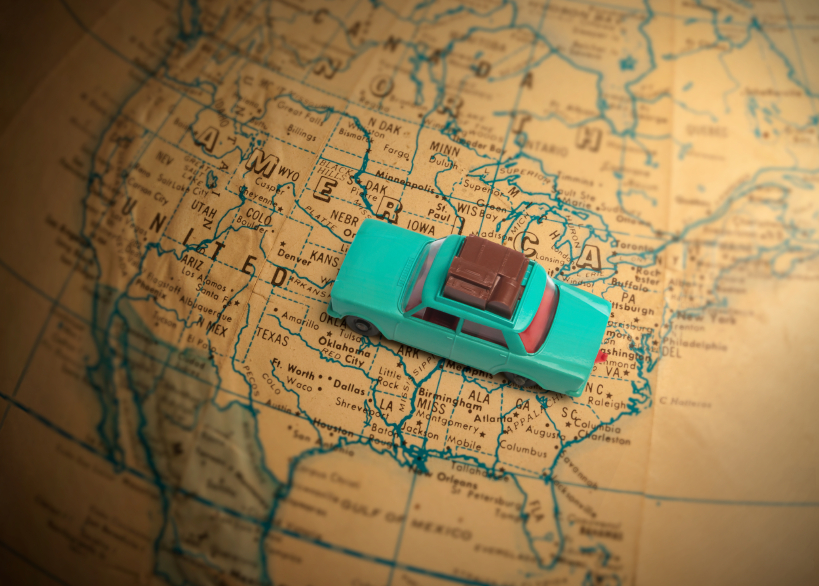 Have your destinations programmed into your GPS or phone navigation app before you start driving, not at the first red light. Activate voice prompts so you don’t keep glancing at the screen.
For cross-Canada trips, two extra steps make a real difference:
- Download offline maps for your full route in Google Maps or Apple Maps. Cell coverage drops sharply between Sudbury and Thunder Bay, across parts of the Prairies, and in mountain passes in BC.
- Have a paper backup. A CAA TripTik or a basic provincial road map costs nothing and works when your phone won’t.
Secure phones, maps, and GPS units in proper holders. Loose items become projectiles in a sudden stop, and a phone sliding off the dashboard is a guaranteed distraction.
Tip #6 – Watch for wildlife, weather, and wildfire smoke
This is the tip we’ve added for 2026, and it matters more every year for Ontario drivers heading north or west.
- Wildlife collisions spike at dawn and dusk in Northern Ontario, the Prairies, and BC. Moose, deer, and elk are most active in low light. If you see one animal cross, expect a second.
- Sudden storms can roll across the Prairies with little warning. If hail or heavy rain hits, slow down or pull off under cover (not under a tree).
- Wildfire smoke has affected travel routes in every western province in recent summers. Check air quality at weather.gc.ca and provincial 511 services before driving through affected areas. Switch your vehicle’s ventilation to recirculate when smoke is heavy.
Tip #7 – Share the driving and respect fatigue
On a multi-day trip, no single driver should be behind the wheel for more than about 8 hours in a day, and you should swap drivers (or stop) every 2–3 hours. Drowsy driving is a leading cause of single-vehicle highway crashes in Canada, and coffee is not a substitute for sleep. If you’re yawning, drifting, or missing exits, that’s the signal to stop — not push through.

Frequently Asked Questions: Summer Road Trips from Ontario in 2026
How long does it take to drive from Toronto to Vancouver?
The drive is approximately 4,400 km via the Trans-Canada Highway and takes 42–45 hours of pure driving time. Most travellers split it over 5–7 days, with overnight stops in cities like Sault Ste. Marie, Thunder Bay, Winnipeg, Regina, Calgary, and Kamloops.
How long is the drive from Toronto to Halifax?
Toronto to Halifax is about 1,800 km and takes roughly 18 hours of driving time. Most families spread it over 2–3 days with overnight stops in Montreal or Quebec City, and Edmundston or Fredericton.
When should I get my vehicle serviced before a road trip?
Two to three weeks before departure. That gives a shop time to order any parts and gives you time to address anything serious without pushing your trip dates.
What tire pressure should I use for a summer road trip?
Use the pressure listed on the sticker inside your driver-side door jamb (not the number on the tire sidewall, which is the maximum). Check pressure when tires are cold — driving heats them up and inflates the reading. In hot summer weather, slightly underinflated tires are a real blowout risk on highways.
What should I pack in a road trip emergency kit?
At minimum: bottled water, non-perishable snacks, a first aid kit, jumper cables or a portable jump pack, a flashlight with spare batteries, basic tools, a blanket, a phone charger and cable, paper maps, and high-visibility triangles or flares. For Northern Ontario or the West, add bug spray and bear spray.
Are there rest stops along the Trans-Canada Highway in Ontario?
Yes, but they’re more spread out than ONroute centres on the 400-series highways. Plan fuel stops carefully between Sudbury and Thunder Bay — some stretches have over 100 km between gas stations, and even fewer 24-hour options.
Do I need to plan differently for an EV road trip across Canada?
Yes. EV charger density drops significantly outside major centres, especially in Northern Ontario and parts of the Prairies. Use apps like ChargeHub or PlugShare to map fast chargers along your route, build buffer time into each leg, and have a backup plan for chargers that are out of service. ONroute centres on Ontario’s 400-series highways have fast chargers.
Is it safe to drive through wildfire-affected areas?
Check provincial 511 road condition services and Environment Canada air quality reports the morning of any travel day. If you must drive through smoky areas, keep windows up, set ventilation to recirculate, and reduce speed for poor visibility. Avoid travel through actively burning regions — closures can change quickly.
What’s the speed limit on the Trans-Canada Highway?
It varies by province. In Ontario most of Highway 17 is posted at 90 km/h with some stretches at 100 km/h. In Manitoba and Saskatchewan it’s typically 100–110 km/h. In Alberta and BC, divided sections can be 110 km/h. Always follow posted signs — and remember that fines for speeding are higher in some provinces than in Ontario.
Final thoughts: prepare now, relax later
The best summer road trips are the ones that feel effortless once you’re rolling — and that comes down to preparation, not luck. Service your vehicle, plan your route, pack smart, and build in time to actually enjoy the country you’re driving through. Save the feet-up moments for once you arrive at your destination.
Safe travels from all of us at Active Green + Ross.
 Article originally written by Scott Marshall and updated for 2026 by Active Green + Ross. We are proudly Canadian owned and operated and based in Ontario.
Scott Marshall is Director of Training for Young Drivers of Canada and has worked in road safety since 1988. He was a judge during the first three seasons of Canada’s Worst Driver on Discovery Network. Scott has been writing columns on driving since 2005, and his work has appeared in newspapers, magazines, and websites across Canada.