Stopping your car isn’t one part’s job — it’s three. Your brakes, tires, and shocks work as a single system that transportation safety experts call the safety triangle. When all three are in good shape, your vehicle stops predictably. When any one of them is compromised, your stopping distance grows, your control drops, and your risk climbs — often without you noticing until it matters most.
At Active Green + Ross Tire & Auto Centres, we’ve been servicing Ontario drivers for decades, and this is the most important maintenance concept we want every customer to understand. Here’s what the safety triangle is, how 2026 Ontario inspection standards define “safe,” and how to stay on the right side of them.
What Is the Vehicle Safety Triangle?
The safety triangle is a simple way of describing a critical truth: your brakes alone don’t stop your car. Brakes apply the force, tires transmit that force to the road, and shocks keep the tires firmly planted so that force actually does its job. Remove any one point of the triangle and the other two can’t compensate.
Think of it this way: a performance brake system on worn tires is a worn-tire stopping distance. New winter tires on blown shocks will still chatter, skip, and lose grip under hard braking. This is why modern vehicle safety inspections in Ontario — now delivered through the Ministry of Transportation’s DriveON digital safety inspection program — examine all three as interdependent systems, not isolated parts.
Point 1: Brakes — The Most Critical Safety System on Your Vehicle
Brakes remain the component most often cited in vehicle-defect-related collisions, which is why Ontario’s inspection standards set hard minimums for what counts as roadworthy.
Ontario’s 2026 Brake Standards
To pass an MTO safety inspection in Ontario, your vehicle’s brake-shoe lining must measure at least 1.7 millimetres, and brake pads worn below roughly 2 mm are among the most common reasons cars fail certification. Rotors with excessive rust coverage, uneven thickness, or scoring below manufacturer specifications will also fail.
Since the MTO transitioned fully to its digital safety inspection platform in 2025, licensed technicians are now required to photograph brake components and record measurements directly into a secure Ministry portal. The paper certificate era is over — today’s inspection is a documented, measurable record of exactly how much life is left in your brake system.
Don’t Forget the Brake Fluid
Brake fluid is hygroscopic — it absorbs moisture from the air over time, which lowers its boiling point and reduces braking performance, especially during repeated hard stops. Most manufacturers, including those producing newer vehicles, recommend a brake fluid flush every two years or every 50,000 km, whichever comes first. It’s an inexpensive service that restores the full stopping capability your brakes were designed to deliver.
Warning Signs You Shouldn’t Ignore
Modern brake pads come equipped with wear indicators that produce a high-pitched squeal when it’s time for replacement. If you hear that sound, or notice any of the following, book an inspection right away:
- Squealing, grinding, or metallic scraping sounds when braking
- A pulsing or vibrating brake pedal
- The vehicle pulling left or right when you brake
- A soft, spongy, or low-feeling pedal
- Longer stopping distance than you remember
At Active Green + Ross, our Vehicle Preventative Maintenance Guide recommends a brake inspection every 10,000 km — roughly every second oil change — so we can catch wear before it damages rotors or compromises stopping power.
Point 2: Tires — Your Only Connection to the Road
Four hand-sized contact patches of rubber are what keep your vehicle on the road. That’s it. Every acceleration, every turn, and every stop has to travel through those four small rectangles of tread — which is why Ontario and Transport Canada both take tire condition seriously.
Ontario’s 2026 Tire Tread Standards
Passenger vehicles in Ontario need a minimum tread depth of 2 mm to pass a safety inspection. But “passing inspection” is not the same as “safe in Canadian conditions.” Transport Canada advises against using any tire worn close to 4 mm (5/32″) on snow-covered roads, because traction and stopping distance degrade sharply below that point.
Tire Pressure: The Free Safety Upgrade
Low tire pressure increases stopping distance, accelerates uneven wear, raises fuel consumption, and in cold weather — when tire pressure naturally drops — the issue compounds. The fix is simple: check your tire pressure monthly when tires are cold, and always before a long highway trip. Use the pressure listed on the driver-side door jamb or in your owner’s manual, not the maximum printed on the tire sidewall.
Winter Tires in Ontario: Optional by Law, Essential in Practice
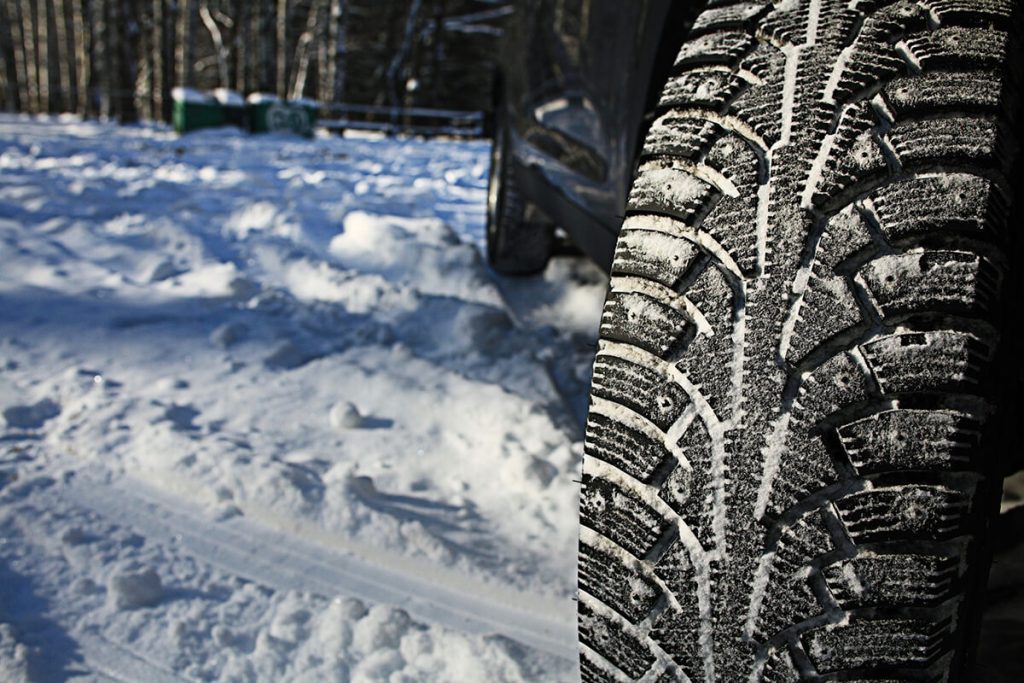
Quebec is the only Canadian province where winter tires are mandatory. In Ontario, they’re optional — but the data makes a compelling case for using them anyway. According to the Tire and Rubber Association of Canada’s 2025 Canadian Consumer Winter Tire Study, 80% of Canadian drivers now use winter tires, and 84% of them say winter tires have helped them avoid a hazardous driving situation such as a loss of control or collision.
The regulatory evidence is equally strong: after Quebec mandated winter tires in 2008, the province saw roughly a 5% drop in winter collisions in the first two seasons and 574 fewer annual injuries from winter road crashes. Transport Canada’s more recent data shows the annual average of winter collisions in Quebec has dropped approximately 19% since the rule tightened in 2013 — more than four times the national average decline.
Ontario drivers also benefit from a practical incentive: under provincial regulation, auto insurers in Ontario must offer a discount to policyholders who use four dedicated winter tires during the winter driving season. The savings often cover a meaningful portion of the tires’ cost over their lifespan.
How to Identify a True Winter Tire
Look for the Three-Peak Mountain Snowflake symbol (also called the Alpine Symbol) on the sidewall. Under Transport Canada’s Motor Vehicle Safety Regulations, only tires that meet a specific snow-traction performance standard are permitted to carry this mark. The older “M+S” (Mud and Snow) designation on all-season tires does not meet the same performance bar.
Winter tires use softer rubber compounds that stay flexible below 7°C — the temperature at which all-season rubber starts to harden and lose grip. That difference is what delivers the shorter stopping distances and superior control that Canadian winters demand.
Other Tire Practices That Matter
- Rotate tires every 10,000 km to ensure even wear across all four positions
- Balance tires every 25,000 km or 12 months to prevent vibration and uneven wear
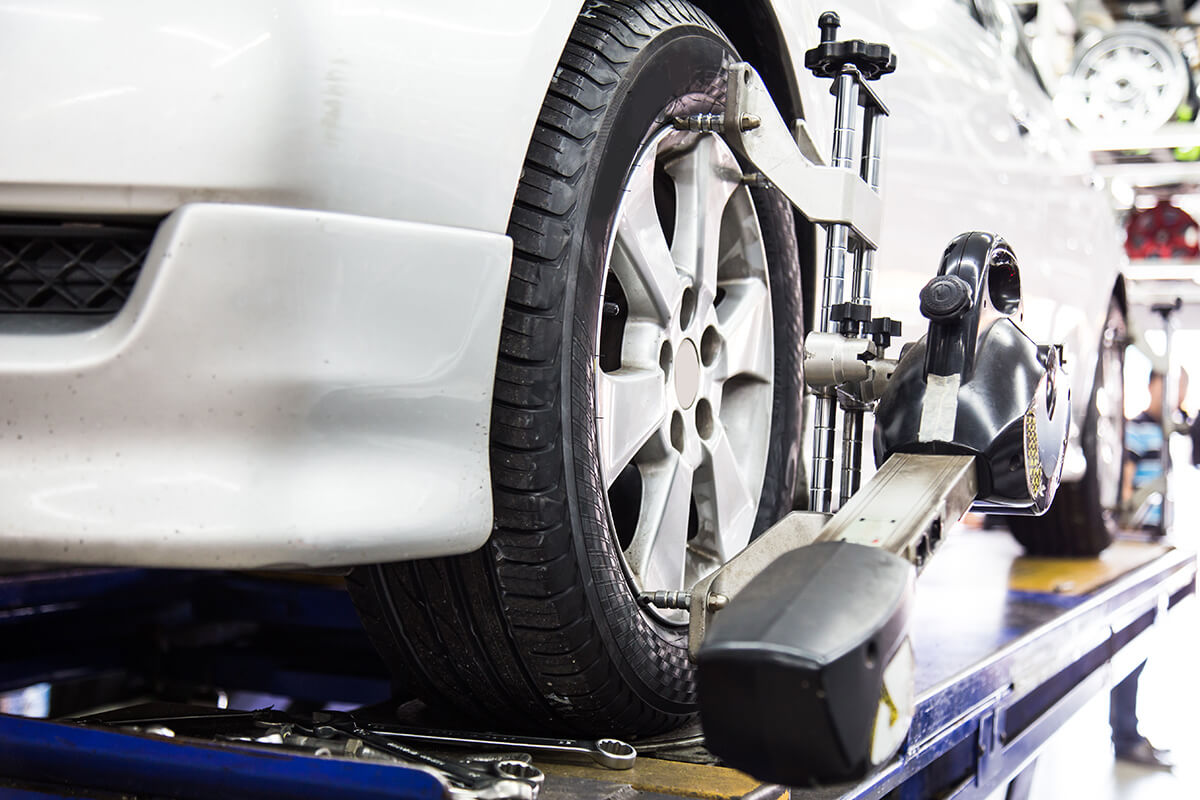
- Check wheel alignment every 25,000 km or 12 months — misalignment chews through tread fast and pulls the vehicle under braking
- Install winter tires in sets of four — mixing tire types compromises handling and stability
- Have wheel lug nuts re-torqued between 80 and 160 km after any tire installation
- Inspect for sidewall damage, bulges, embedded objects, and uneven tread wear — any of these warrant a professional look
Unusual tire wear patterns are also an early warning signal for the third point of the triangle.

Point 3: Shocks & Suspension — The Silent Safety Component
Most drivers think of shocks and struts in terms of ride comfort. That’s a dangerous misunderstanding. A shock absorber’s primary job isn’t smoothing out bumps — it’s keeping the tire in firm contact with the road surface so your brakes and tires can actually do their jobs.
The Stopping Distance Impact
This is the statistic every driver should know: research by tire and suspension manufacturers, corroborated by data referenced by the U.S. National Highway Traffic Safety Administration, indicates that worn shock absorbers can increase stopping distance by up to 20%. At 50 km/h, a single worn shock absorber can add roughly two metres to the distance required to stop.
Two metres is the length of a small car. It’s also the difference between stopping at a crosswalk and stopping in it.
Warning Signs of Worn Shocks
Shocks wear gradually, so the degradation is easy to miss. Watch for:
- Nose-dive when braking is when the front of the car dips noticeably under moderate stops
- Excessive bouncing after hitting a bump or pothole
- Body roll or sway in corners, or unsettled feel at highway speeds
- Cupped or uneven tire wear patterns
- Visible fluid leaking from the shock or strut body
- The vehicle squatting on acceleration or continuing to bounce after a bump
Inspection and Replacement Intervals
Active Green + Ross’s Vehicle Preventative Maintenance Guide recommends inspecting shocks and struts at 80,000 km and as required thereafter — or sooner if you notice any of the warning signs above. Most modern shocks last between 80,000 and 160,000 km depending on driving conditions, and Ontario’s combination of potholes, frost heaves, gravel shoulders, and construction-season rough pavement tends to push wear toward the lower end of that range.
When replacement is needed, always replace shocks in pairs (both front or both rear). A new shock paired with a worn one produces uneven damping across the axle, which causes unpredictable handling under braking and can accelerate wear on the new component.
How the Safety Triangle Works Together
Here’s why all three points matter as a system, not as individual line items on a service invoice:
- When you hit the brake pedal, the brake system generates stopping force at each wheel.
- That force only slows the vehicle if the tires maintain traction with the road — which requires adequate tread, correct pressure, and a rubber compound suited to the temperature.
- Tire contact is only maintained if the shocks keep the tires pressed firmly to the pavement through the weight transfer and suspension movement that happens during any hard stop.
Let one link weaken and the whole chain fails. This is why Ontario’s DriveON digital inspection examines brakes, tires, and suspension components together, with documented measurements and photographs captured for each.
Your 2026 Safety Triangle Maintenance Checklist
The intervals below reflect Active Green + Ross’s Vehicle Preventative Maintenance Guide, paired with the MTO’s regulatory minimums. Following this schedule keeps all three points of your safety triangle in good working order.
| Service | AGR Recommended Interval | Ontario Minimum / Best Practice |
|---|---|---|
| Brake inspection | Every 10,000 km | Lining ≥ 1.7 mm (MTO); replace well before this |
| Clean & adjust rear brakes | As required, every 10,000 km | Part of a full brake inspection |
| Brake system fluid flush | Every 50,000 km or 2 years | Restores full braking performance |
| Tire rotation & inspection | Every 10,000 km | Even wear across all four positions |
| Tire balance | Every 25,000 km or 12 months | Prevents vibration and uneven wear |
| Wheel alignment / inspection | Every 25,000 km or 12 months | Protects tires and handling |
| Tire tread depth (visual) | Monthly | ≥ 2 mm (MTO); replace before 4 mm for winter |
| Tire pressure | Monthly, cold | Per door-jamb specification |
| Winter tire swap | When temps drop below 7°C | Install 4 matching tires with 3PMS symbol |
| Shocks & struts inspection | Every 80,000 km, as required | Replace in pairs when wear detected |
For a full view of preventative maintenance on every component of your vehicle, see the complete Active Green + Ross Vehicle Preventative Maintenance Guide.

Frequently Asked Questions
How long do brake pads last in Ontario?
Most brake pads last between 40,000 and 80,000 km, but Ontario’s stop-and-go urban traffic, winter salt, and hilly terrain in some regions can shorten that range. Active Green + Ross recommends a brake inspection every 10,000 km to catch wear before it damages the rotors.
Are winter tires required by law in Ontario?
No. Winter tires are mandatory only in Quebec. However, Ontario law requires auto insurers to offer a discount to drivers who equip their vehicles with four winter tires, and Transport Canada strongly recommends them for all Canadian winter driving.
How do I know if my shocks are bad?
Common signs include nose-diving under braking, excessive bouncing after bumps, uneven or cupped tire wear, visible fluid leaks on the shock body, and a “floaty” or unstable feel at highway speeds. Any of these warrant a professional inspection.
What’s the difference between a shock and a strut?
Both dampen suspension movement, but a strut is a load-bearing structural part of the suspension and often influences wheel alignment. Most modern vehicles use struts on the front and shocks on the rear, though this varies by make and model.
How much does an MTO safety inspection cost in Ontario?
Costs vary by shop and vehicle type, typically ranging from around $60 to $150. Since early 2025, all certificates are issued digitally through the DriveON system rather than on paper.
Book Your Safety Triangle Inspection at Active Green + Ross
Every point of the safety triangle is something we service every day. Our licensed technicians use OEM-spec equipment and documented measurements to tell you exactly where your brakes, tires, and shocks stand — and what, if anything, needs attention before it becomes a safety concern.
Find your nearest Active Green + Ross Tire & Auto Centre and book a safety inspection. Your family, your passengers, and the other drivers on Ontario’s roads are counting on all three points of that triangle being in working order.
Authoritative Resources Referenced
- Ontario Safety Standards Certificate — Government of Ontario
- Using Winter Tires — Transport Canada
- 2025 Canadian Consumer Winter Tire Study — TRAC
This article is for general educational purposes. Always consult a licensed technician for vehicle-specific advice. Active Green + Ross Tire & Auto Centres have been serving Ontario drivers since 1976.