

Spring is here, and summer isn’t far behind. Before you head out for road trips on warm, dry pavement, there’s one thing worth checking, are your winter tires still on?
It’s a common habit among Canadian drivers: leaving winter tires on a little longer than planned, especially if driving less than usual. But what seems harmless can actually reduce your safety on the road, wear out your tires faster, and cost you more money in the long run.
According to the Tire and Rubber Association of Canada (TRAC), winter tire usage across Canada has grown to 80% of drivers as of 2025 which is a significant increase over recent years. That’s great news for winter safety, but it also means more drivers face the question every spring: when is it time to switch them off?
At Active Green + Ross, we believe informed drivers make safer choices. Here’s what you need to know before driving on winter tires during the warmer months.
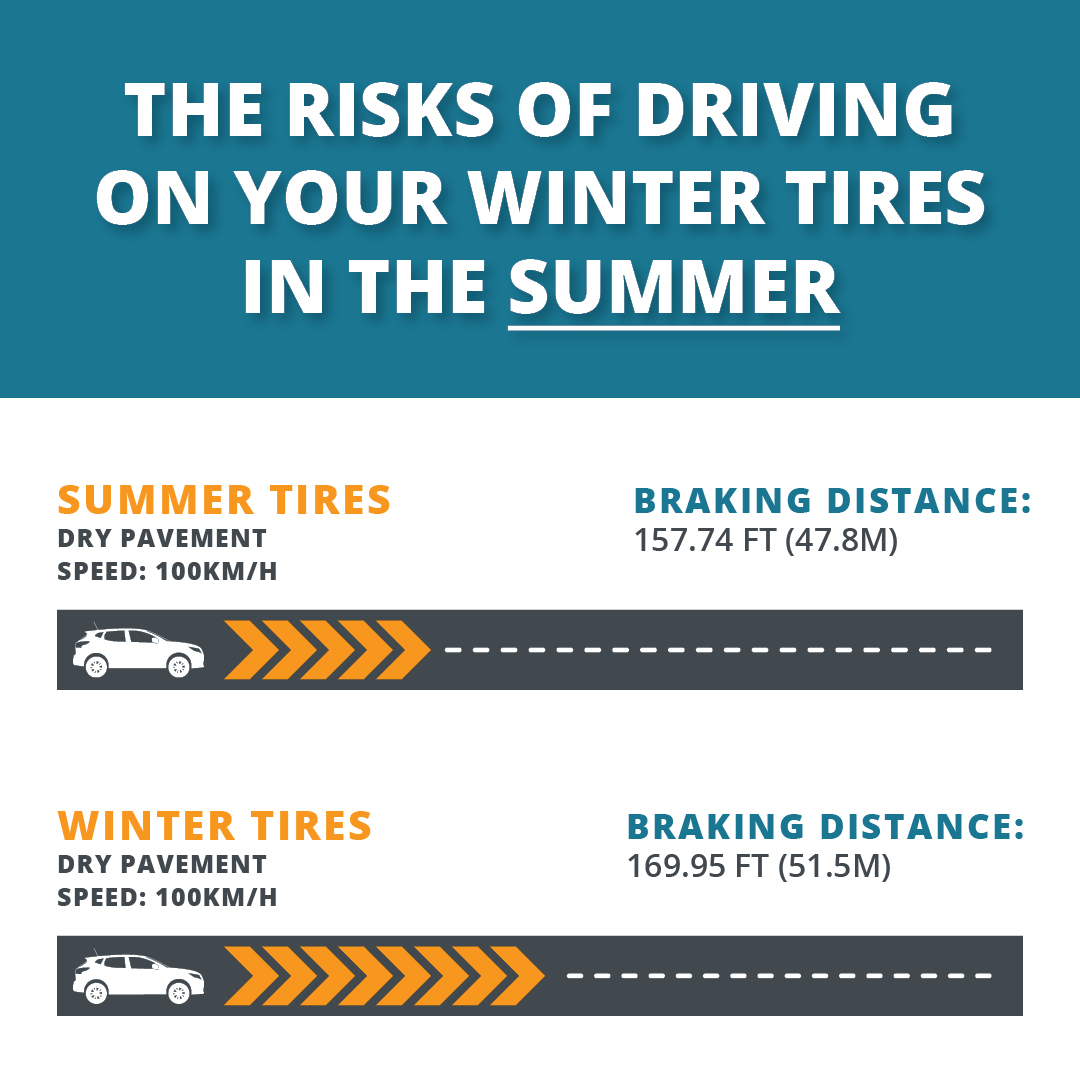
The 3 Main Risks of Driving on Winter Tires in Summer
1. Reduced Safety and Handling
Winter tires are built with softer rubber compounds that stay flexible in cold temperatures, giving you better grip on ice and snow. But in warm weather, that same softness works against you. The rubber becomes too pliable, and your tires lose the firmness needed for precise control.
The result:
- Longer braking distances — studies show stopping distances increase by at least 10% on dry pavement and up to 26% on wet roads
- Reduced cornering stability — the softer tread deforms more during turns, especially at highway speeds
- Less responsive steering — your vehicle won’t react as quickly or predictably when you need it most
Bottom line: Winter tires on warm pavement mean your vehicle handles worse in exactly the situations where you need it to handle well — sudden stops, lane changes, and wet roads.
2. Faster Tire Wear and Shorter Lifespan
Warm pavement is punishing on winter tire rubber. The soft compound that grips so well in January gets chewed up by hot asphalt in June.
- Tread blocks deform and wear unevenly under heat
- The rubber compound breaks down faster than it’s designed to
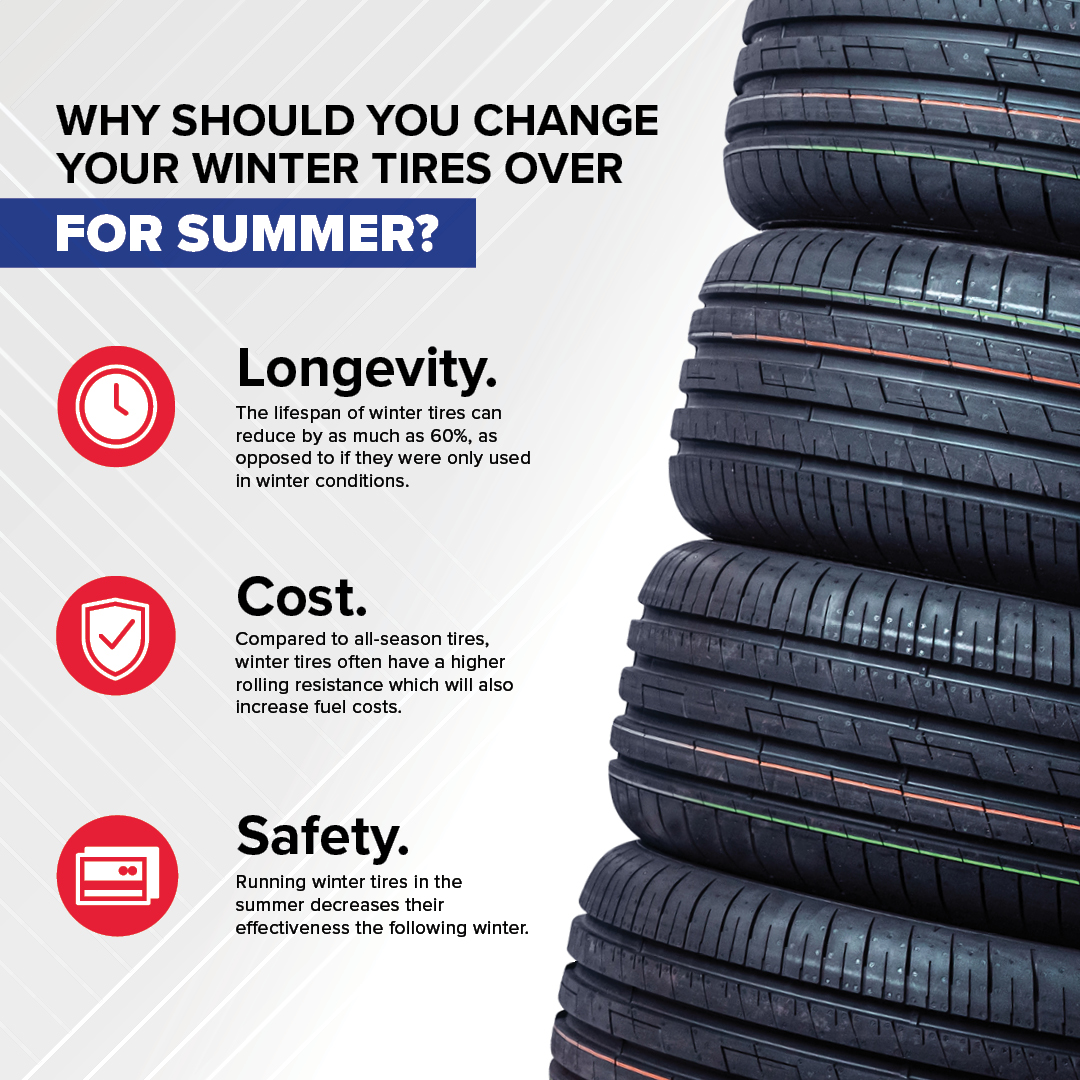
- You could reduce the lifespan of your winter tires by up to 60% compared to seasonal use only
Bottom line: Driving on winter tires through summer can cost you a full season — or more — of usable tread. That means buying your next set of winter tires much sooner than you should have to.
3. Higher Long-Term Costs
Keeping your winter tires on past their season might feel like you’re saving money by avoiding a tire swap. In reality, it usually does the opposite.
- Premature tire replacement — replacing winter tires every two years instead of four or five adds up fast
- Higher fuel consumption — the softer rubber creates more rolling resistance, meaning your engine works harder and uses more fuel
- Uneven wear — which can lead to vibrations, noise, and the need for earlier replacement
Bottom line: Switching your tires on time protects your investment and saves money over the long run. Two sets of tires used seasonally will almost always outlast one set used year-round.
When Should You Switch Off Winter Tires?
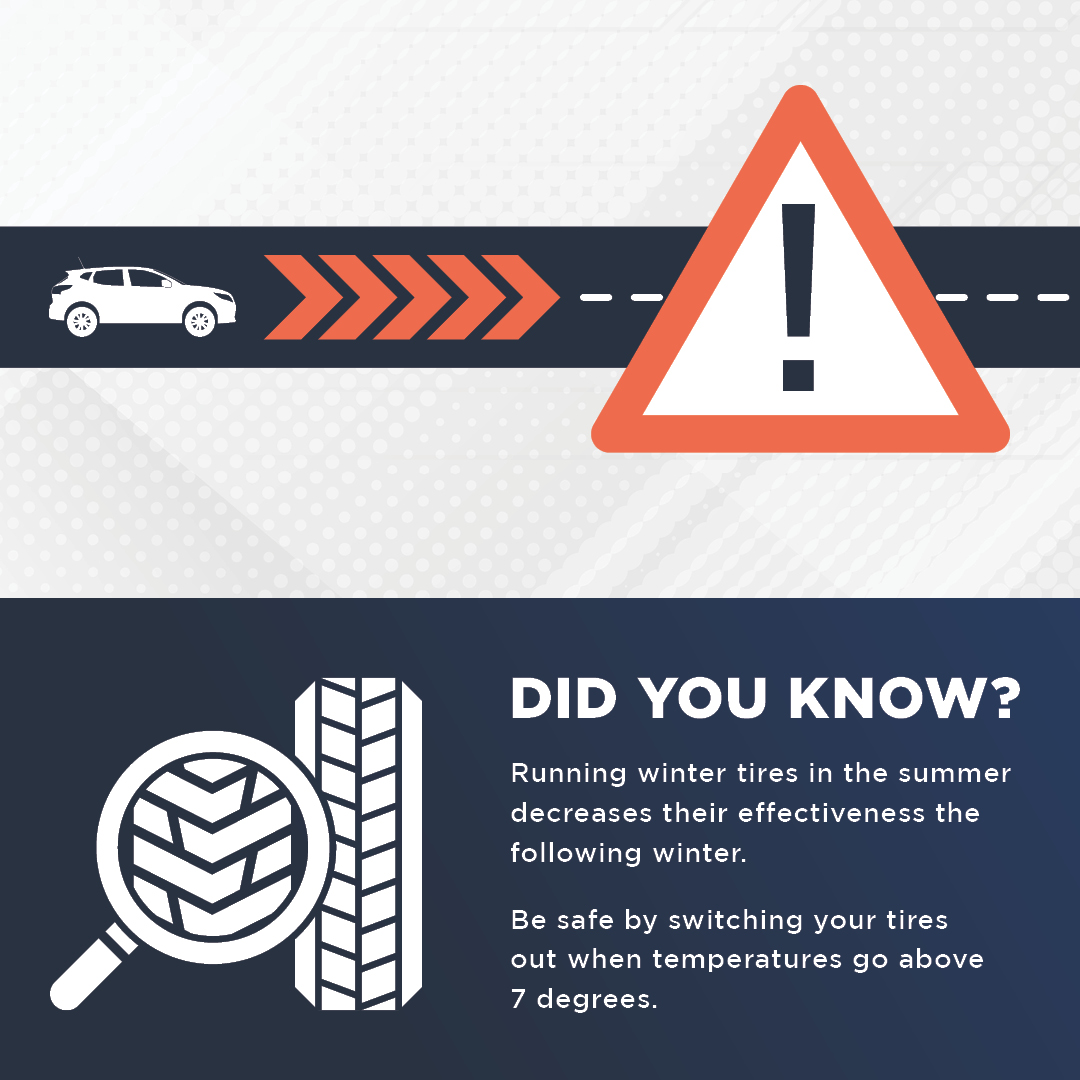
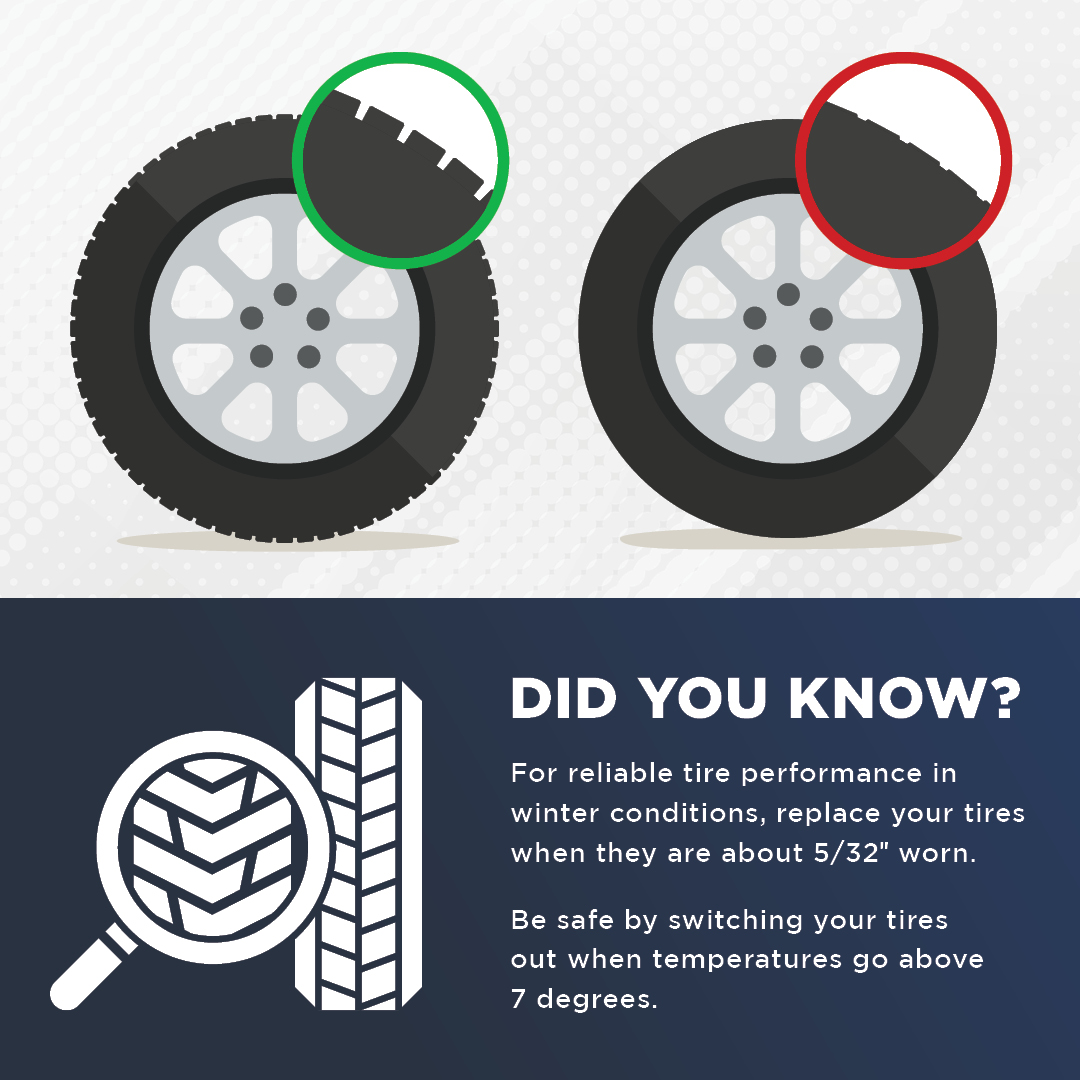
The industry-standard rule is straightforward: remove your winter tires when daily temperatures consistently stay above 7°C (45°F). Below that threshold, winter rubber stays soft and grippy which is exactly what you want. Above it, the compound starts to lose its advantage and wears faster.
For most of southern Ontario, that means switching sometime in mid-to-late April. Drivers in northern Ontario may want to wait until late April or early May if cold snaps are still in the forecast.
Don’t wait for summer heat to force the decision — by then, you’ve already put unnecessary wear on your winter tires.
3 Main Risks at a Glance

Safety
Longer stopping distances & reduced control

Longevity
Up to 60% shorter tire lifespan

Cost
Higher fuel use & premature replacement
What Are Your Best Options?
- Switch to your all-season or summer tires if you already own a set — book your changeover before the spring rush
- Upgrade to new all-season or summer tires if your current set is worn — for optimal warm-weather safety and performance
- Have your tires inspected to check tread depth, wear patterns, and overall condition before you commit to another season
Not sure which option is right for you? Our experts can help you choose the best solution based on your driving habits, vehicle type, and budget.
Visit Your Local Active Green + Ross
With over 65 locations across Ontario, Active Green + Ross is your trusted destination for tire changeovers, inspections, and expert advice. Our certified technicians help ensure your vehicle is ready for the road — no matter the season.
Book your spring tire appointment today »
Or visit activegreenross.com to find a location near you.
Active Green + Ross — The Tire & Service Experts. We Will Not Be Undersold.
Thank you, and keep it rolling.