
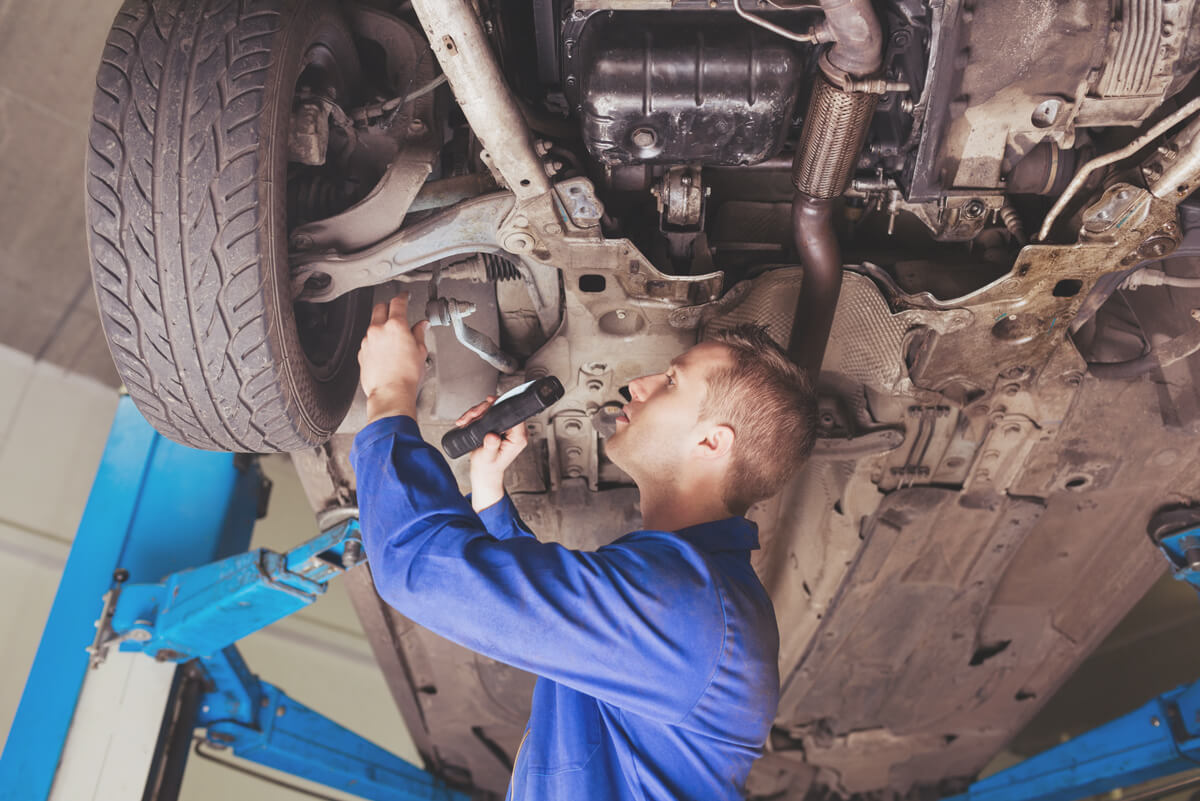
Shocks and struts are some of the hardest-working safety parts on your vehicle — and some of the most overlooked. They wear out gradually, so most drivers never notice the slow decline until handling, braking, and ride comfort have all quietly gotten worse. On Ontario roads, where freeze-thaw cycles and potholes are a fact of life, that wear happens faster than many people expect.
This guide explains what shocks and struts do, the warning signs to watch for and listen for, why worn units are a genuine safety concern, and how often you should have them inspected.
What do shocks and struts actually do?
Both shock absorbers and struts keep your vehicle from bouncing and help keep your tires firmly planted on the road. The terms are often used interchangeably, but they are different parts — and one cannot replace the other.
A vehicle has either a shock or a strut at each wheel, never both. A strut is a structural part of the suspension that also supports vehicle weight and affects steering geometry and wheel alignment; a shock absorber simply controls the motion of the spring. Many vehicles use struts on the front axle and shocks at the rear.
It helps to think of the parts as a team. Your springs hold the vehicle up and absorb the initial impact of a bump. Your shocks and struts control how those springs move afterward — stopping the bounce so your tires stay in contact with the pavement. When that contact is lost, even for a fraction of a second, your tires can’t grip, steer, or brake.
7 warning signs your shocks or struts need attention
Because the wear is gradual, the signs are easy to miss. Here is what to watch for and listen for:
- Excessive bouncing after a bump. If the vehicle keeps bobbing or floating after you hit a dip or pothole, the shocks are no longer controlling spring movement.
- Nose-diving when you brake. A pronounced forward dip during braking is a classic sign of worn front struts or shocks.
- Rocking or swaying in turns. If the body leans heavily through corners or sways at highway speeds, ride control is compromised.
- “Rocking” when you come to a stop. The front end dipping and rebounding as you stop is another red flag.
- Uneven or cupped tire wear. Scalloped, patchy “cupping” on the tread is often caused by tires bouncing instead of rolling smoothly.
- Clunks, knocks, or rattles over bumps. Listen for noises from the corners of the vehicle when crossing rough pavement — a sign of worn shock/strut mounts or internal wear.
- Fluid leaks on the shock or strut body. An oily film running down the unit means the internal seals have failed.
A quick at-home check is the bounce test: with the vehicle parked, push down firmly on one corner and let go. A healthy suspension settles in roughly one bounce. If it keeps bouncing two or three times or more, have the shocks and struts inspected.
Why worn shocks and struts are a safety issue — not just a comfort one
It’s easy to file shocks and struts under “ride comfort,” but their real job is keeping your tires on the road. A worn shock lets the tire skip and bounce after a bump, and a tire that’s airborne — even briefly — provides zero braking and zero steering grip.
That has a direct effect on how quickly you can stop. Industry and academic testing has consistently linked worn shock absorbers to longer stopping distances, with some research putting the increase at roughly 20 percent — extra metres that can be the difference between stopping safely and a collision, especially on wet or rough roads. Worn units also reduce steering precision and stability, accelerate tire wear, and put extra strain on other chassis and brake components.
In short: you can have brand-new tires and brakes, but if your suspension can’t keep those tires on the pavement, the rest of the system can’t do its job.
The Ontario pothole problem — and what it does to your suspension
If you drive in Ontario, your suspension takes a beating. The province’s freeze-thaw cycle — water seeps into pavement cracks, freezes, expands, then thaws — is exactly what creates potholes, and they multiply every late winter and spring.
The scale is significant. The City of Toronto reported filling more than 257,000 potholes in 2025, and in early 2026 pothole-damage claims jumped about 47 percent compared with the previous year after a severe winter. CAA’s annual Worst Roads campaign for 2025 again ranked Hamilton’s Aberdeen Avenue the worst road in Ontario, followed by Barton Street East in Hamilton and County Road 49 in Prince Edward County, with badly rated roads in nearly every region of the province.
The cost to drivers is real, too. In a January 2025 CAA survey of Ontario members, nearly half of respondents said they had experienced vehicle damage from poor road conditions, and most paid for repairs out of their own pocket. CAA estimates pothole and poor-road damage typically runs from $500 to over $2,000 per incident, and that poor roads cost the average Canadian driver about $126 a year. Potholes commonly damage tires and rims, but the harder hits go straight to your shocks, struts, and wheel alignment.
How often should you have shocks and struts inspected?
At Active Green+Ross, our maintenance guide recommends having shocks and struts inspected every 75,000 km. That’s a sensible baseline — but it assumes average roads.
If you regularly drive on rough roads, gravel, or pothole-heavy routes, or you carry heavy loads, it’s smart to have them looked at sooner. In particular, after an Ontario winter — or any time you take a hard hit from a pothole — it’s worth having the suspension and your wheel alignment checked, since the same impacts that wear shocks and struts also knock tires out of alignment. Catching it early protects your tires, your fuel economy, and the rest of your chassis.
Frequently asked questions
What’s the difference between a shock and a strut?
A strut is a structural suspension part that supports vehicle weight and affects alignment and steering; a shock absorber only damps spring motion. A vehicle uses one or the other at each wheel — never both — and they aren’t interchangeable.
How long do shocks and struts last?
There’s no fixed lifespan — wear depends on road conditions, driving style, and load. As a guideline, have them inspected every 75,000 km, and sooner if you drive a lot of rough or pothole-heavy roads.
Can I drive with worn shocks or struts?
You can, but you shouldn’t ignore them. Worn units lengthen your stopping distance, reduce stability and steering control, and cause uneven tire wear — so they’re a safety concern, not just a comfort one.
How do I know if mine are worn?
Watch for excessive bouncing, nose-diving when braking, swaying in turns, uneven tire wear, clunking noises over bumps, or fluid leaking from the units. The bounce test is a quick first check; a professional inspection confirms it.
Do potholes really damage shocks and struts?
Yes. Hard pothole impacts are one of the most common causes of premature shock, strut, and alignment problems — which is why Ontario drivers should have their suspension checked after winter.
Have your suspension inspected at Active Green+Ross
Worn shocks and struts rarely fail all at once, so a professional inspection is the best way to know where you stand. Our priority is helping your vehicle last longer, drive safer, and perform better.
Trust your local Tire & Service Experts. Learn more about our suspension and shock service, find your nearest Active Green+Ross location, and SCHEDULE an appointment TODAY!
Active Green+Ross is a main supplier and servicing dealer of Monroe shocks and struts, premium suspension products since 1916.